Welcome to the ASPS 2022 Elections! This year we are holding elections for Vice President and three positions on the Board of Directors for the 2023-25 term. Please make one selection for Vice President and three for the Board of Directors from the candidates listed below. The elections will be open until 12:00 midnight EST on November 24, 2022.

Voting Instructions:

  • Log in with your ASPS membership account information. Please note that you cannot vote unless you are logged in with your ASPS account and have an active membership. To become an ASPS member, please click here.
  • Read the bios of the nominees below.
  • Follow the link at the end of the page to cast your ballot.

The Nominees for Vice President

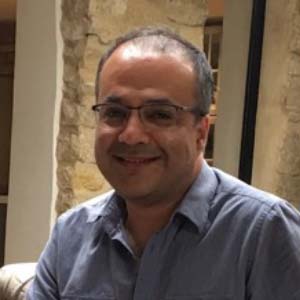
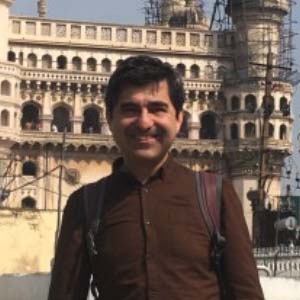
Evrim Binbaş

Evrim Binbaş (PhD, 2009, The University of Chicago) teaches Islamic history at the University of Bonn. He studies early modern Islamic history with a particular focus on the Timurid and Turkmen dynasties in the fifteenth century. His award winning first book on the Timurid historian Sharaf al-Din ‘Ali Yazdi (d. 1454) was published by Cambridge University Press (Intellectual Networks in Timurid Iran: Sharaf al-Dīn ‘Alī Yazdī and the Islamicate Republic of Letters) in 2016. Currently he is preparing a monograph on the modalities of sovereignty in the fifteenth and sixteenth centuries. In his new monograph, Binbaş highlights the non-monarchical forms of sovereignty in the early modern Islamic world. If elected, his primary objective would be expanding our membership base both in Western and non-Western academic institutions.

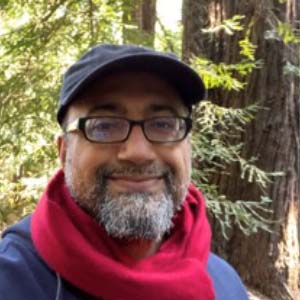
Jawid Mojaddedi

Jawid Mojaddedi  is Professor of Religion at Rutgers University, where he has been teaching since 2003. He served as Chair of the Department of Religion and Director of the Center for Middle Eastern Studies during this time. Before coming to Rutgers he served as Assistant Editor for Encyclopaedia Iranica and also taught Arabic and Islamic Studies at the University of Manchester and the University of Exeter. Born in Kabul, Prof. Mojaddedi was raised and educated in the United Kingdom, receiving his PhD in 1998 from the Middle Eastern Studies Department of the University of Manchester as a recipient of a doctoral scholarship from the British Academy.

The Nominees for the Board of Directors

Ali Anooshahr

Ali Anooshahr is a historian of the “Persianate World” with a special focus on India and Iran during the late medieval and early modern periods. He received his B.A. from the University of Texas at Austin in 1998, and his M.A. (2002) and Ph.D. (2005) from UCLA. He taught at Saint Xavier University in Chicago (2007-8) and moved to the University of California at Davis in 2008 as a scholar of “comparative Islamic empires” during the medieval and early modern periods. Before this, he worked for two years (2005-2007) cataloging Persian, Ottoman, and Arabic manuscripts at UCLA Library’s Special Collections. He is on the editorial board of the Journal of the Economic and Social History of the Orient. His research has been supported by fellowships from the Guggenheim Foundation, the Mellon Foundation, and the Hellman Foundations, among others. His books include: (Ed. with Ebba Koch),The Mughal Empire from Jahangir to Shah Jahan: Art, Architecture, Politics, Law and Literature, (The Marg Foundation, March 2019) and Turkestan and the Rise of Eurasian Empires: A Study of Politics and Invented Traditions (Oxford, 2018).

Daniel Beben

Daniel Beben holds a dual PhD in History and Central Eurasian Studies from Indiana University and is currently Assistant Professor of History and Religious Studies at Nazarbayev University in Kazakhstan. His research focuses chiefly on the religious history of the Persianate world, with a particular emphasis on the social histories of Shiʿi and Sufi communities. Daniel has been a member of ASPS since 2011. He served as ASPS Treasurer from 2016 to 2018 and as Secretary from 2019 to 2021. He has also served on the evaluation committee of the ASPS Central Eurasia Research Fund (CERF). His recent publications include The First Aga Khan: Memoirs of the 46th Ismaili Imam: A Persian Edition and English Translation of Muḥammad Ḥasan al-Ḥusaynī’s ʿIbrat-afzā (I.B. Tauris and the Institute of Ismaili Studies, 2018; co-authored with Daryoush Mohammad Poor) and articles published in the Journal of Persianate Studies, Journal of the Economic and Social History of the Orient, Journal of the Royal Asiatic Society, Journal of Islamic Studies, and History of Religions. Daniel’s current research projects include a monograph on the history of the Ismaʿili Shiʿi tradition of Central Asia, as well as a co-authored book and an edited volume on the topic of genealogical history in the Persianate world.

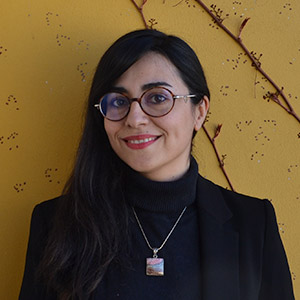
Peyvand Firouzeh

Peyvand Firouzeh is Lecturer in Islamic Art at the University of Sydney. Her interests include connected histories of Sufi networks and artists in Persianate societies and material histories of the Indian Ocean world. She holds degrees from Tehran Art University and University of Cambridge and has served on the board of directors of VisAsia (2020-2022), a philanthropic partner of the Art Gallery of New South Wales, which promotes the study of Asian – including South Asian and Islamic – art in Australia.
Peyvand is currently completing her first book manuscript, entitled Intimacies of Global Sufism: The Arts of Shrine Making between Early Modern Iran and India. She is also at work on two other projects, one on temporal and spatial distance in the arts of Deccan India during the fifteenth century, and the other on real and imagined migrations of the coco-de-mer shell, native to the islands of Seychelles, in the Indian Ocean. Among several fellowships and awards, she was the recipient of a joint fellowship between ASPS and H. K. Sherwani Centre for Deccan Studies at Maulana Azad National Urdu University, Hyderabad. She is keen to help ASPS create further collaborative opportunities, especially to connect early career researchers with scholars and institutions where sustained field research, language training, and professional networks can combine to open up new avenues of research in Persianate arts and culture.

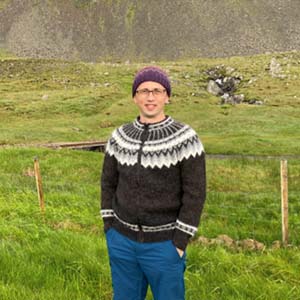
Stefan Kamola

Stefan Kamola is excited about the opportunity to join the Board of Directors of ASPS.  He completed my PhD in 2013 and has since then held teaching and research positions in private and public institutions, in both the US and Europe.  This has given him first-hand exposure to the opportunities and challenges facing scholars of Iranian Studies in many capacities.  Dr. Kamola hopes this experience can benefit the explicitly international mission of the ASPS.  This is also a very good time for him professionally to join the board, as he began a Lise Meitner Research Fellowship at the Austrian Academy of Sciences.  In the coming years, his attention will be entirely focused on Iranian Studies at an institution in the center of Europe, situating him to take an active role in the governance of the ASPS.
In addition to his academic credentials, Dr. Kamola has served on the board of two cooperative organizations: the Oberlin Student Cooperative Association (1998-2001) and much more recently, the Willimantic Food Cooperative (WFC, 2019-2021).  Through these experiences, he has learned how to monitor an organization’s financial and organizational wellbeing through policy governance as a fiduciary director.  The fact that he gained this experience in a specifically cooperative setting has made him a better communicator and collaborator.  At the WFC, he led an initiative to increase member engagement, and at both organizations he helped to rewrite corporate bylaws to better reflect the needs and goals of our membership.  Dr. Kamola hopes to bring this experience in legal, financial, and organizational management to the ASPS board and to continue learning about such work in an academic setting.

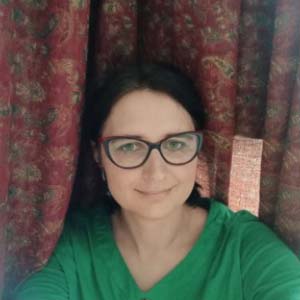
Karolina Rakowiecka-Asgari

Karolina Rakowiecka-Asgari is lecturer and then Assistant Professor (Adjunct) in The Department of Iranian Studies, Institute of Oriental Studies, Jagiellonian University, Kraków, Poland; in 2021-22 head of The Department of Interdisciplinary Eurasiatic Research of IOS UJ, with which she has closely co-operated for many years.
She received her master’s degrees: in Iranian Studies from Jagiellonian University (cum laude), and in Persian Language and Literature (program for Iranian Students) from Teachers’ Training University (currently: Kharazmi) in Tehran; and her PhD in Literary Studies from Jagiellonian University. Both her MA and PhD thesis were subsequently published: Poetyka pytania. Analiza zjawiska w twórczości Qejsara Aminpura (Poetics of Inquiry: Case Study in The Poetry of Qeisar Aminpur), WUJ, Kraków 2010, Myśl nieoswojona oswaja świat. O kulturotwórczej roli zagadki w starożytnej Eurazji (On Culture-shaping Function of Riddles in Ancient Eurasia), WUJ, Kraków 2011.
She was awarded by The Foundation for Polish Science (FNP) with the START Scholarship For Young Researchers (2012) and her monography co-authored with Asgar Asgari Hasanaklou,
صدای زمامه: جامعه شناسی شخصیت زن در رمان بعد از انقلاب (Signum Temporis: Sociology of Female Character in Iranian Post-revolutionary Novel, Akhtaran, Tehran 2015) was nominated to Jalal Al-e Ahmad’s Award in field of literary criticism and re-edited in 2016.
Her main field of research comprised at first comparative studies in ancient cultures, but in the course of time, modern and classical Persian literature and poetics, especially from such angles as literary capability of creating inter-textual worlds and reflecting social change, have become increasingly important to her. This goes along-side with her teaching experience extending to the fields of social issues of today’s Iran, political rhetoric and translation.
Recently, she has actively engaged in creating spaces for academic co-operation, e.g. launching the project Mythical Geography of Contemporary Fiction of Iran (strengthening the cooperation of Polish Iranian Studies’ centers) and coming up with a proposal of ASPS Virtual Event Series IX Iranian Heritage and Today’s World – a three-part even that is currently being conducted by ASPS and Jagiellonian University as its regional branch. She has also been responsible for programs of science popularization, such as series of discussions concerning the issues of 2022’s Iranian World, and managing social media of the department.

ASPS membership
Become a member

You must have valid ASPS membership in order for your abstract to be accepted. You must also be a member to register to participate in the conference.

Become a member