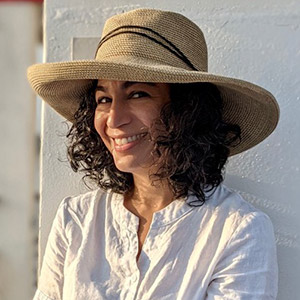
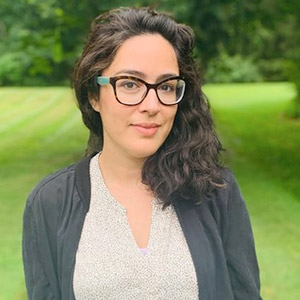
Welcome to the ASPS 2021 Elections!. This year we are holding elections for Secretary, two positions on the Board of Directors and the position of Student Representative on the Board of Directors for the 2022-24 term. Please make one selection for Secretary and Student Representative and two for the Board of Directors from the candidates listed below. The elections will be open until 12:00 midnight EST on November 24, 2021.

Voting Instructions:

  • Log in with your ASPS membership account information. Please note that you cannot vote unless you are logged in with your ASPS account and have an active membership. To become an ASPS member, please click here.
  • Read the bios of the nominees below.
  • Follow the link at the end of the page to cast your ballot.
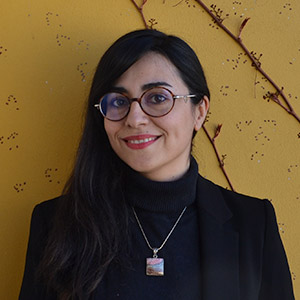
The Nominees for Secretary

Peyvand Firouzeh

Dr Peyvand Firouzeh is Lecturer in Islamic Art in the Department of Art History at the University of Sydney. She specializes in medieval and early modern art and material culture from the Islamic world, with particular interest in sacred architecture, its intersections with poetry and politics, artistic networks in Persianate societies, and environmental aesthetics across the Indian Ocean.
Prior to joining the University of Sydney, Peyvand held several international research and curatorial positions with the Getty Foundation and American Council of Learned Societies, the Kunsthistorisches Institut in Florence (Max-Planck-Institut), the Forum Transregionale Studien and Museum für Islamische Kunst in Berlin, and the British Museum in London. Her leadership roles include directing the University of Sydney’s program in Master of Art Curating and serving on the board of directors of VisAsia, a philanthropic partner of the Art Gallery of New South Wales, which promotes Asian – including South Asian and Islamic – art in Australia.

Rob Haug

I am Associate Professor of Islamic World History at the University of Cincinnati. My research interests focus on Early Islamic Iran and Central Asia with a special emphasis on frontiers. My first book, The Eastern Frontier: Limits of Empire in Late Antique and Early Medieval Central Asia, explored the frontiers of Greater Khurasan from the Sasanian through Samanid periods and the role of the frontier in this time of transition. My current project focuses on the Arab conquests and the Second Fitna in Khurasan through a close examination of the career of `Abdallah ibn Khazim and his son Musa, and how narratives of the frontier were preserved in Islamic historiography. I am excited for the opportunity to help ASPS continue to grow and pursue its mission of bringing together scholars of Persianate Societies, especially building connections between those of us in Western universities with our colleagues in Iran and the Persianate world. I look forward to the day when we can again meet in person—hopefully soon. As secretary, I accept the challenge of organizing such a conference—but would encourage us to not forget the virtual opportunities to connect and share our work we have used over the past two years.

The Nominees for Board of Directors

Behrooz Ghamari-Tabrizi

Behrooz Ghamari-Tabrizi is Professor and Chair of Near Eastern Studies and Director of Sharmin and Bijan Mossavar-Rahmani Center for Iran and Persian Gulf Studies at Princeton University. He holds a Ph.D. in sociology from the University of California, Santa Cruz. He is the author of three books on different aspects and historical context of the Iranian revolution of 1979 and its aftermath: Islam and Dissent in Post-Revolutionary Iran, London, New York: I. B. Tauris (Palgrave-Macmillan), 2008; Foucault in Iran: Islamic Revolution after the Enlightenment, Minneapolis, MN: University of Minnesota Press, 2016; and Remembering Akbar: Inside the Iranian Revolution, New York, London: O/R Books (Counterpoint), 2016. He has also coedited a special issue of Radical History Review (No. 105, Fall 2009), The Iranian Revolution Turns Thirty, Duke University Press; and a special issue of Iran-Nāmag (vol. 3, no. 2, Summer 2018), Michel Foucault and the Historiography of Modern Iran. He has written extensively on the topics of social theory and Islamist political thought in different journals and book chapters. Currently, he is working on a project on Mystical Modernity, a comparative study of philosophy of history and political theory of Walter Benjamin and Ali Shariati.

Mana Kia

Mana Kia is an Associate Professor in the Department of Middle Eastern, South Asian, and African Studies at Columbia University. Her interests include the connected social, cultural, intellectual histories of West, Central, and South Asia from the 17th – 19th centuries. Her first book, Persianate Selves: Memories of Place and Origin before Nationalism (Stanford, 2020) explores how premodern conceptions of place and origins provided expansive possibilities of Persian selfhood. She is working on a second book, which outlines how a shared sense of aesthetic and ethical form (adab as culture) was socially and politically enacted in the transregional circulation of people, texts, practices, and ideas between Iran and Hindustan. She is enthusiastic about helping ASPS continue to develop its unique features. She is especially keen to help ASPS continue its work of connecting scholars in Europe and North America with those in former and current Persianate countries, through various conventions, and activities, especially via regional centers. Another of her priorities is to assist with growing ASPS membership, especially among younger scholars, who must find new ways of connecting and conducting research among current global conditions.

Marjane Wardaki

Marjan Wardaki – Biography
Marjan Wardaki is an intellectual historian of modern Middle East and South Asia, with research interests in the Persianate world, the history of science and medicine, and the history of migration.
She earned an MA in Middle Eastern History from UC Irvine, then completed her doctorate at the University of California, Los Angeles in European and South Asian history. Her article, titled “Rediscovering Afghan Fine Arts: The life of an Afghan student in Germany, Abdul Ghafur Brechna” was recently published in Modern Asian Studies.
She is currently working on her book manuscript, which traces the birth of scientific and medical institutions in Afghanistan and India through the lens of itinerant scientists.

The Nominees for Student Representative on the Board of Directors

Catherine Ambler

I am grateful for the opportunity to be considered for the student position in the ASPS Board of Directors. I am a doctoral candidate in Columbia University’s Department of Middle Eastern, South Asian, and African Studies (MESAAS). My dissertation (“Masters of the Distant Meanings: Maliha Samarqandi, Shawkat Bukhari, and the Transformative Ambiguity of Persian Poets”) traces the significance of forms of ambiguity in both the biographical accounts and poetic compositions of seventeenth century Persian poets associated with the poetics of Tāza Gū’ī (Speaking Afresh). More broadly, my research interests are in the areas of pre-modern Persian literatures, Islamic studies, and pre-modern Persianate and Islamic Central Asia (Turan).
I am especially interested in running for the student position in the ASPS Board as an opportunity to contribute to and participate in ASPS’s support of collaborations and exchanges between scholars working on Persianate societies. As a graduate student at MESAAS, I have experience helping to organize the MESAAS graduate student conference in past years, in a variety of capacities including fundraising; publicity/outreach; and abstract review. I have also served as a graduate student representative in my department. Through Columbia University’s Rare Books and Manuscripts Library, I have worked on the Muslim World Manuscripts Project, helping to improve the information on Persian and Arabic manuscript holdings with an aim of facilitating digital access to the manuscripts, so as to make them more broadly accessible to scholars.

ASPS membership
Become a member

You must have valid ASPS membership in order for your abstract to be accepted. You must also be a member to register to participate in the conference.

Become a member